The world of crosswords is rich with ingenious wordplay, historical references, and clever misdirection. Among the myriad of clues that captivate solvers, some stand out for their intriguing blend of history and linguistic dexterity. One such puzzle that has frequently stumped and delighted enthusiasts is the "Old Border Rediscovered" crossword clue. If you've ever wrestled with "Old border rediscovered in sad off key composition (6,4)" or a similar variant, you're not alone. The answer, often revealing a significant historical landmark, is OFFASDYKE.
This article delves deep into this fascinating clue, unpacking its cryptic layers, exploring the historical significance of its solution, and providing you with insights to conquer similar challenges. Whether you're a seasoned puzzler or just starting your cryptic crossword journey, understanding the mechanics behind the "Old Border Rediscovered Crossword Clue" can unlock a new level of appreciation for this mental exercise.
Decoding the Cryptic Clue: "Old Border Rediscovered"
Cryptic crosswords are a distinct breed, renowned for their intricate wordplay where clues don't simply define a word but rather describe it in a convoluted, often humorous way. The clue "Old border rediscovered in sad off key composition (6,4)" is a prime example of such brilliance. To solve it, one must dissect each component, looking for subtle hints about definitions, anagrams, homophones, or other wordplay devices.
Let's break it down:
- "Old border rediscovered": This is the definition part of the clue. It directly points to a historical boundary that might have faded from common memory but is now brought to light.
- "in sad off key composition": This is the wordplay, designed to lead you to the answer through a less direct route. The phrase "off-key composition" immediately suggests something related to sound or music that isn't quite right. "Composition" here refers to an arrangement or a piece of music, and "off-key" means out of tune or incorrect. This combination often signals a phonetic clue or a charade (a word made up of parts).
The magic happens when you interpret "off-key composition" to sound like the solution. If a piece of music were "off as dyke," it would be an "off-key composition" phonetically suggesting the answer. The word "sad" could be a distractor, adding flavour text, or perhaps a subtle hint at the tone of the "off-key" sound. In many cryptic crosswords, parts of the wordplay serve to mislead or to enhance the poetic nature of the clue rather than directly contribute letters. The brilliance of such clues lies in making you hear the answer within the seemingly unrelated phrase.
Offa's Dyke: A Historical Marvel and Crossword Favorite
The solution to our "Old Border Rediscovered Crossword Clue" is OFFASDYKE (often seen as OFFAS DYKE when clued as 6,4). This isn't just a clever play on words; it refers to a remarkable historical monument with profound significance.
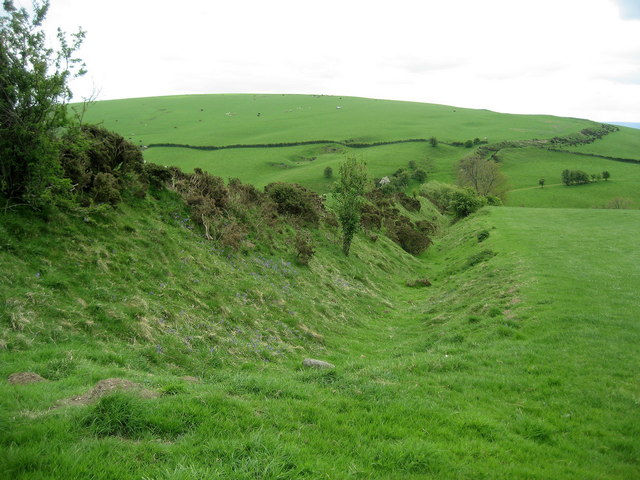
- Who Built It? Offa's Dyke is a large linear earthwork, roughly following the current border between England and Wales. It is named after Offa, the powerful Anglo-Saxon King of Mercia, who ruled from 757 to 796 AD.
- What Was Its Purpose? While its exact purpose is still debated by historians, it is widely believed to have been a defensive fortification, a demarcation line, or a psychological barrier to control movement and trade between Mercia and the Welsh kingdoms to the west. It served as a clear 'old border' in ancient Britain.
- Its Legacy Today: Today, parts of Offa's Dyke are still visible and form a long-distance footpath known as the Offa's Dyke Path. It is a testament to early medieval engineering and political will, stretching approximately 177 miles (285 km) from the Severn Estuary in the south to the Irish Sea in the north.
For crossword setters, Offa's Dyke is a treasure. Its unique name, historical gravitas, and clear identity as an "old border" make it perfect fodder for cryptic clues. The "rediscovered" aspect of the clue cleverly alludes to how this ancient earthwork has been 'rediscovered' by archaeologists, historians, and hikers over the centuries, bringing its importance back into the public consciousness. To dive deeper into the revealed answer, explore Old Border Rediscovered Crossword Answer: OFFASDYKE Revealed.
The Art of Solving Cryptic Crosswords: Beyond the "Old Border Rediscovered"
Solving cryptic crosswords is a skill that develops with practice and an understanding of common clue types. The "Old Border Rediscovered Crossword Clue" exemplifies several techniques that are crucial for success. Here’s how you can sharpen your cryptic-solving abilities:
- Understand the Structure: Every cryptic clue has two parts: a precise definition and a piece of wordplay. Learn to identify which part is which. The definition often sits at one end of the clue.
- Identify Clue Types:
- Anagrams: Words like "confused," "broken," "arranged," "composition," "sadly," "rumble," "out of order" often indicate that the letters of a word or phrase need to be rearranged.
- Homophones: Clues using "heard," "audibly," "say," "sounds like," or "off-key" (as in our example) suggest that the answer sounds like something else.
- Charades: The answer is built up from smaller words placed together (e.g., "ON ION" for onion).
- Hidden Words: The answer is literally hidden within the clue's text (e.g., "part you" = PARTY). Look for indicators like "in," "some of," or "part of."
- Reversals: Words like "up," "back," "turn," "over" indicate that a word should be spelled backward.
- Double Definitions: The clue provides two different definitions for the same word.
- Pay Attention to Punctuation: In cryptics, punctuation can often be misleading or entirely ignored by the setter.
- Utilize Letter Counts: The numbers in parentheses (like 6,4 for OFFAS DYKE) are your best friends. They tell you the exact length of the answer and if it’s a single word or multiple words.
For a detailed breakdown of solving techniques specifically tailored to this kind of clue, check out How to Solve 'Old Border Rediscovered' Cryptic Crossword Clue.
Unpacking "Sad Off Key Composition" Further
The beauty of "sad off key composition" lies in its multi-layered misdirection. While "composition" might make you think of an anagram, it's the "off-key" that guides you towards sound. Imagine a tune that's not quite right, perhaps even a bit mournful ("sad"). If that tune's sound could be rendered as "off as dyke," you've cracked the phonetic code. This level of linguistic play is what makes cryptic crosswords so rewarding. It's not just about knowing words, but about understanding how they can be twisted, mimicked, and reinterpreted to conceal an answer in plain sight.
Why This Clue is a 'Rediscovered' Puzzle
The "rediscovered" element in the clue isn't merely functional; it adds a layer of depth and historical resonance. For many, Offa's Dyke might be a distant memory from a history lesson or a name briefly encountered. By presenting it as an "Old border rediscovered," the crossword clue subtly nudges solvers to recall or learn about a significant piece of British heritage. This makes the solving experience not just a mental exercise but also a journey of discovery. Crosswords, especially those with historical or geographical answers, often serve as fascinating educational tools, embedding knowledge in a memorable and engaging way. They keep history, geography, and general knowledge vibrant and accessible.
Practical Tips for Tackling Tough Crossword Clues
Don't let cryptic crosswords intimidate you. With a systematic approach and a dash of perseverance, you can master even the trickiest clues. Here are some actionable tips:
- Start with the Easiest: Solve the clues you're confident about first. This fills in letters, providing invaluable cross-references for harder clues.
- Look for Indicators: Familiarize yourself with common anagram, homophone, reversal, and hidden word indicators. They are your signposts in the cryptic landscape.
- Break Down the Clue: Mentally or physically separate the definition from the wordplay. Then, break the wordplay into smaller, manageable parts.
- Consider All Meanings: Many words have multiple meanings. Cryptic setters love to exploit this, using a less common definition for misdirection.
- Think Phonetically: For clues involving sound, try saying parts of the clue aloud. Sometimes, the answer will simply 'sound right.'
- Use a Crossword Solver (Wisely): If you're truly stuck, tools like The Crossword Solver can provide potential answers based on letters you have and the clue. Use them to learn, not just to cheat. Once you see the answer, try to work backward to understand the wordplay.
- Practice Makes Perfect: The more you solve, the more attuned you become to the setters' patterns and tricks.
- Don't Be Afraid to Walk Away: Sometimes, taking a break and returning with fresh eyes is all it takes for the 'aha!' moment to strike.
The "Old Border Rediscovered Crossword Clue" culminating in OFFASDYKE is a perfect illustration of the elegance and challenge that cryptic crosswords offer. It combines historical depth with linguistic ingenuity, making the moment of revelation incredibly satisfying. By understanding the common techniques, appreciating the historical context, and practicing regularly, you can transform the frustration of being stuck into the triumph of solving even the most puzzling clues. Keep puzzling, keep learning, and enjoy the rich tapestry of knowledge and wordplay that crosswords provide.